If you run a business, commercial solar panels could help you reduce electricity costs, improve energy efficiency and lower your organisation’s carbon footprint. From offices and warehouses to factories and retail premises, solar energy can be a practical way to generate electricity on-site and reduce your reliance on the grid. However, before investing in commercial solar panels, it is important to understand how they work, what affects their performance and which factors can influence the return on your investment. So what do you need to know about commercial solar panels?
How do commercial solar panels work?
Commercial solar panels use photovoltaic (PV) technology to convert daylight into electricity. The panels generate direct current (DC) electricity, which an inverter converts into alternating current (AC) for use by your business.
The electricity generated can power lighting, computers, machinery, refrigeration and other equipment. If your panels produce more electricity than your premises needs at a particular time, you may be able to export the surplus to the grid and receive payments through an eligible export tariff.
Commercial systems are generally designed around the energy demands and available space of a business. This means the number of panels and the amount of electricity generated can vary considerably between properties.
Is your business premises suitable for solar panels?
Your building plays an important role in determining whether commercial solar panels are a suitable investment.
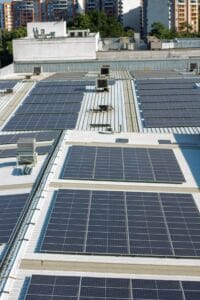
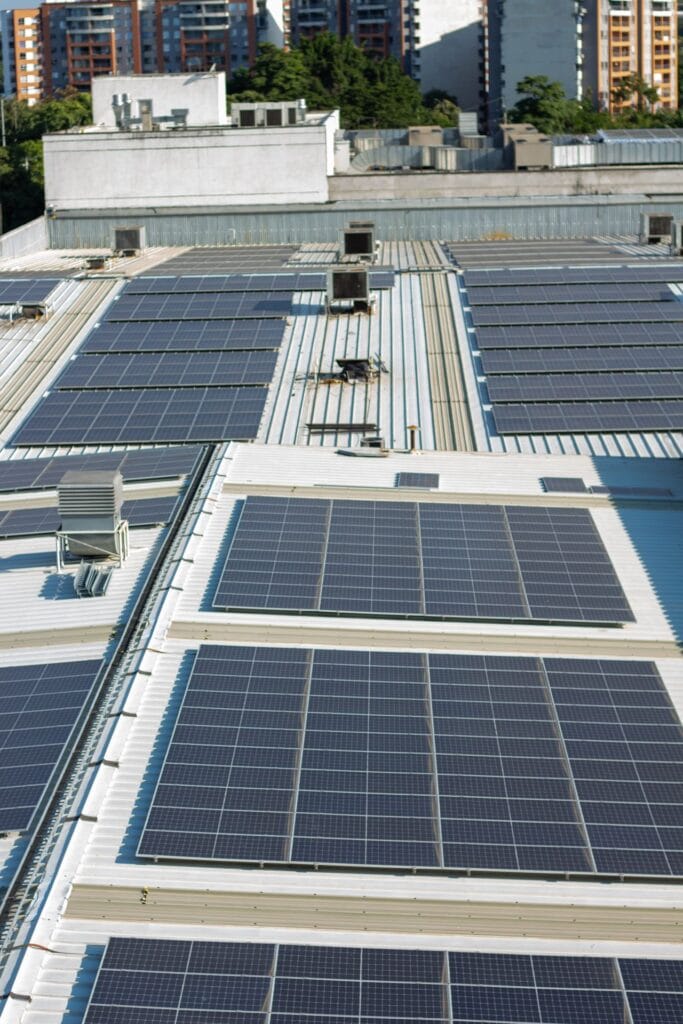
Large, unobstructed roofs can provide valuable space for solar panels, particularly on warehouses, factories and agricultural buildings. However, a large roof does not automatically mean you need a large solar system. Before installation, a professional installer should assess:
- Roof condition: Your roof should be in suitable condition to support the system for the long term.
- Structural strength: The building must be able to accommodate the additional weight and withstand the relevant wind loads.
- Available space: Roof equipment, skylights, vents and other obstructions can affect the number and positioning of panels.
- Shading and orientation: Nearby buildings, trees and roof features can influence electricity generation.
- Electrical infrastructure: Your existing electrical supply and grid connection may affect the system design and any upgrades required.
If your business rents its premises, you should also establish whether you have permission from the property owner to install solar panels.
How much can commercial solar panels save your business?
One of the main benefits of commercial solar panels is the opportunity to reduce the amount of electricity you purchase from your supplier.
Your savings depend on how much electricity the system generates and how much of that electricity your business uses directly. If your premises operates during daylight hours, you may be able to use a significant proportion of the electricity as it is generated.
For example, a factory running machinery throughout the working day may be able to use solar electricity immediately. A business that uses most of its electricity overnight may have different requirements and could benefit from considering battery storage.
To estimate your potential savings, an installer should consider your electricity bills, consumption patterns, tariff and expected solar generation. This information can help you understand the likely payback period and long-term financial benefits.
It is important to base your decision on realistic estimates rather than assuming that every unit of electricity generated will translate into the same level of savings.
Do commercial solar panels require battery storage?
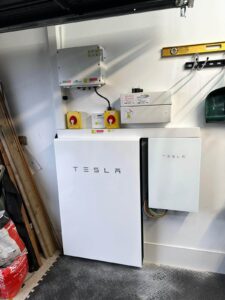
Any electricity generated can be used by your business immediately, with surplus electricity potentially exported to the grid. However, battery storage may be useful if your business regularly generates more solar electricity than it can use during the day. This would allow you to store some of this surplus electricity so that it can be used later, when solar generation is lower.
Whether a battery is worthwhile depends on your operating hours, energy consumption and the costs involved. Battery storage increases the initial investment, so it is sensible to compare the expected financial benefits of installing panels alone against installing panels with a battery.
What about planning permission and grid connections?
Planning requirements depend on the building, the proposed installation and its location. Some rooftop installations may qualify as permitted development, while others require planning permission or additional checks, particularly where listed buildings or other restrictions are involved.
Your business may also need approval or notification arrangements for connecting the solar system to the electricity network. The requirements depend on the system’s size and design, so these should be established early in the planning process.
An experienced commercial solar installer can help identify the relevant requirements and explain which permissions, applications and certificates are needed before the system is commissioned.