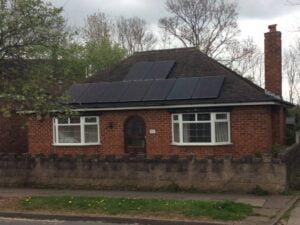
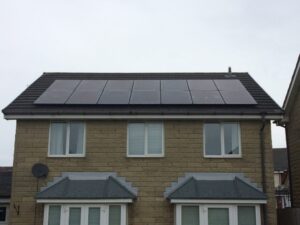
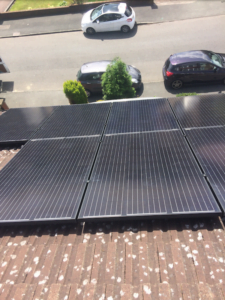
Generating your own electricity is one of the main benefits of having solar panels, but your system may sometimes produce more energy than your property needs. Rather than letting that surplus electricity go unused, you may be able to export it to the national grid and receive payment from an energy supplier. The process is relatively straightforward, but there are a few important steps to understand before you can start receiving payments. So, how do you sell electricity back to the grid?
What happens to excess solar electricity?
Your solar panels generate electricity whenever there is sufficient daylight. If your home is using less electricity than your system is producing, the surplus can potentially be exported to the grid.
For example, your panels may continue generating electricity while you are out at work during the day. If there is no demand for that energy within your home, the excess can be sent to the grid rather than going unused.
The amount available to export will depend on your system size, electricity usage and whether you have battery storage.
Do you need a smart meter?
A smart meter is generally required to accurately measure the amount of electricity your property imports from and exports to the grid. This is because the meter records the electricity flowing in both directions, allowing your energy supplier to determine how much surplus energy you have exported. If you do not already have a suitable smart meter, you may need to arrange for one to be installed before you can receive export payments.

How do you get paid for exported electricity?
To receive payment, you will need to choose an energy supplier that offers an export tariff and meet its eligibility requirements. The process will usually involve:
- Having an eligible solar panel system
- Having a suitable electricity meter
- Choosing an export tariff
- Providing the information requested by your supplier
- Allowing your exported electricity to be measured
Once your arrangement is in place, your supplier can calculate payments based on the amount of electricity you export.
What is the Smart Export Guarantee?
The Smart Export Guarantee (SEG) is a scheme that requires certain licensed electricity suppliers to offer export tariffs to eligible small-scale generators.
Under the scheme, eligible homeowners can receive payment for renewable electricity exported to the grid. The exact rate offered can vary between suppliers and tariffs, so it is worth comparing the available options rather than assuming every export tariff will pay the same amount.
Can you sell electricity without a battery?
Yes. You do not necessarily need battery storage to export electricity. Without a battery, surplus electricity can be exported to the grid as it is generated.
A battery simply gives you another option. Instead of exporting surplus energy immediately, you can store it and use it later when your solar panels are no longer generating electricity.
Whether exporting or storing is more beneficial will depend on your energy consumption patterns and the tariffs available to you.
How can you increase the amount you export?
If your goal is to export more electricity, the first step is having a system capable of generating a suitable amount of surplus energy. You may be able to increase your potential exports by:
- Installing a suitably sized solar panel system
- Using high-efficiency panels
- Reducing your daytime electricity consumption
- Considering whether battery storage is appropriate
- Choosing an export tariff that suits your circumstances
However, exporting as much as possible is not necessarily the best financial strategy. Using your own solar electricity can also reduce the amount of energy you need to buy from the grid.
Can businesses sell electricity back to the grid?
Businesses with commercial solar installations may also be able to export surplus electricity. The arrangements can differ depending on the size of the installation and the organisation’s energy contract. A commercial solar installer or energy supplier can provide advice on the most suitable export arrangements for a business.
So, how do you sell electricity back to the grid?
To sell electricity back to the grid, you will generally need an eligible solar panel system, a suitable meter and an export tariff with an energy supplier. Once your exported electricity can be accurately measured, you can receive payments for the renewable energy your system sends to the grid.
However, exporting electricity is only one part of maximising the value of your solar installation. Using your own generated electricity efficiently can also help reduce your energy bills, while battery storage may allow you to make greater use of surplus generation.
For more information or advice, why not contact the experts today, here at the Eco Renewables Group? We work across the UK, from Oxford to Derby, to deliver high quality solar power solutions.