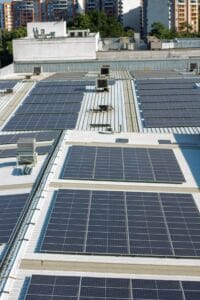
If you’re considering investing in solar panels, one of the most important questions is how much financial benefit you can expect to receive over time. Solar panels require an initial investment, but they can help you reduce electricity costs, generate renewable energy and potentially earn money by exporting surplus electricity to the grid.
Understanding the return on investment (ROI) for solar panels can help you decide whether installation makes financial sense for your home or business. By looking at the initial cost, expected savings and long-term performance, you can build a clearer picture of the value solar energy could bring.
What Does Return on Investment Mean?
Return on investment measures the financial benefit you receive compared with the amount you initially spend.
For solar panels, this means comparing the installation cost with the money you save on electricity bills and any income you receive from exporting surplus electricity.
For example, if you invest £7,000 in a solar panel system and save £700 each year through lower electricity bills and export payments, you would recover the initial cost in approximately ten years, assuming those annual benefits remain consistent.
This is a simplified example rather than a guaranteed outcome. Your actual return will depend on your system, electricity usage, energy prices and installation costs.
How Long Does It Take for Solar Panels to Pay for Themselves?
The payback period is the time it takes for your accumulated financial benefits to equal the original installation cost.
For a typical UK household, the Energy Saving Trust currently estimates a payback period of around 10-12 years, although this varies depending on location, installation costs and how much of your generated electricity you use yourself.
Once your system has paid for itself, it can continue generating electricity and delivering financial benefits for many years.
However, you should remember that solar panels gradually become less efficient over time, and components such as inverters may need replacing during the system’s lifespan. Including these potential costs will give you a more realistic understanding of your long-term return.
What Factors Affect the Return on Investment?
Several factors influence how quickly you recover your initial investment and how much financial benefit you receive.
Initial installation cost
The amount you pay to install your solar panels has a direct impact on your return. A more expensive system will generally take longer to pay for itself unless it delivers proportionately greater savings.
Comparing quotes from reputable installers can help you find a system that offers good value without compromising on equipment quality or installation standards.
Electricity consumption
Your household or business electricity usage can make a significant difference. If you use a large proportion of your solar electricity while it is being generated, you can reduce the amount you need to purchase from your supplier.
This can improve your financial return because using your own electricity generally saves more than exporting the same unit to the grid.
Roof direction and shading
Your roof’s orientation, pitch and exposure to daylight affect how much electricity your panels generate. A roof with good daylight exposure and limited shading can help maximise generation.
An installer should assess your property and estimate the likely annual output before recommending a system.
Electricity prices
The price you pay for electricity also affects your savings. If your electricity costs increase, the value of the energy you generate and use yourself may increase too.
However, future energy prices are difficult to predict, so your financial calculations should avoid relying on guaranteed price rises.
Can You Improve Your Return with a Solar Battery?
A solar battery can help you get more value from your solar panels by storing surplus electricity for later use. This means that instead of exporting all the electricity you do not immediately need, you can store some of it and use it during the evening or when your panels are generating less power. This can be particularly useful if your household or business uses more electricity outside daylight hours.
However, batteries increase the initial investment, so they do not automatically improve your overall return. You should compare the additional cost with the savings you could realistically achieve through greater use of stored electricity.
Can You Earn Money by Selling Electricity Back to the Grid?
If your solar panels generate more electricity than you need, you may be able to export the surplus to the grid and receive payments. Eligible households and businesses can access export tariffs through the Smart Export Guarantee (SEG). The amount you receive depends on your chosen supplier, tariff and the quantity of electricity you export.
Export payments can contribute to your overall return, although rates vary and you will need to meet the relevant eligibility requirements.
When assessing your investment, consider both the value of the electricity you use yourself and the income you could receive from exporting surplus generation.
Is the Return on Investment Different for Businesses?
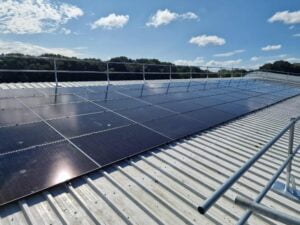
Commercial solar panels can offer significant financial benefits, particularly for businesses with high daytime electricity consumption.
Warehouses, factories, offices and retail premises may have substantial electricity requirements that can be partly met through on-site solar generation.
For businesses, the return on investment depends on factors such as system size, electricity demand, operating hours, installation costs and applicable energy tariffs.
A commercial installation should be designed around the organisation’s consumption patterns. Generating large amounts of electricity is not necessarily the most cost-effective approach if much of that energy cannot be used or exported on favourable terms.
Businesses should also consider potential maintenance costs, equipment replacement and any relevant tax treatment when calculating the financial return.
How Can You Calculate Your Solar Panel Return?
To estimate your return, start by working out the total installation cost, including any battery storage or additional electrical work.
Next, estimate your annual financial benefits by considering:
- Electricity bill savings from using your own solar generation.
- Payments received for exporting surplus electricity.
- Any additional costs, such as maintenance or replacement components.
You can then estimate your simple payback period by dividing the initial installation cost by your expected annual net financial benefit.
For example, a £7,000 installation generating £700 in annual net benefits would have an estimated payback period of ten years.
For a more detailed ROI calculation, you should also consider the system’s expected lifespan, gradual reduction in panel output, future maintenance costs and changes in electricity prices.
So, Will Solar Panels Be A Worthwhile Investment?
Solar panels can provide a worthwhile return on investment by helping you reduce electricity bills and potentially earn money from surplus energy. However, the financial benefits depend on your installation costs, electricity consumption, roof suitability and how effectively you use the electricity generated.
The best way to understand your potential return is to have your property or business assessed and obtain a detailed installation quotation with realistic generation and savings estimates.
Speaking to a professional solar panel installation team can help you compare your options and choose a system designed to deliver long-term value.