If you’re thinking about installing solar panels, the current weather may be putting you off. With the dark days, heavy rain, snow and thick cloud, you might not think that solar panels are worth it at this time of year. But this is not the case. Solar panels still work in winter, although how they perform and how much electricity they generate can vary compared with the summer months. So how do solar panels work in winter? And can you really generate solar power all year round?
So how do solar panels generate power in winter?
Solar panels generate electricity from daylight, not heat. When sunlight reaches the photovoltaic cells, this is converted from light into electricity. As such, even during winter, daylight hours provide enough solar radiation for panels to produce power. While overcast conditions reduce output, they do not stop generation entirely. Diffuse light on cloudy days can still produce usable energy.
The impact of shorter days
The most significant factor affecting solar performance in winter is reduced daylight hours. With fewer hours of sunlight available, your system has less time each day to generate electricity. This naturally leads to lower overall energy production compared with spring and summer.
However, this seasonal drop is expected and factored into system design and performance estimates. Over the course of a full year, solar panels balance higher summer production with lower winter output.
Cold weather and panel efficiency
Cold temperatures can actually improve solar panel efficiency. Solar panels operate more efficiently in cooler conditions than in extreme heat. High temperatures can slightly reduce electrical output, whereas cold weather helps panels operate closer to their optimal performance range.
This means that on bright, cold winter days, your panels can perform very well. While the total energy produced may still be limited by shorter daylight hours, the panels themselves are not hindered by low temperatures.
Overall, from a technical perspective, winter cold is not a disadvantage for solar panels.
Snow and frost considerations
Snow is often raised as a concern for winter solar performance. In practice, snow rarely causes long-term issues for solar panels in the UK. Panels are installed at an angle, which helps snow slide off naturally as it melts or shifts.
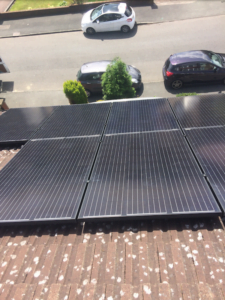
Additionally, solar panels have dark surfaces that absorb heat, encouraging snow to clear more quickly than from surrounding roof areas. Light snow or frost usually melts away without intervention.
During periods when panels are covered by snow, electricity production may pause temporarily. However, these periods are typically short and have a limited impact on annual performance.
The role of system design
A well-designed solar system takes winter conditions into account. Panel orientation, tilt angle, and system size all influence how much electricity you generate during the colder months.
In the UK, panels are typically angled to capture as much annual sunlight as possible, including lower winter sun angles. While it is not practical to optimise exclusively for winter, good design ensures balanced performance across all seasons.
If you have higher winter electricity usage, such as increased lighting or heating demand, system sizing and battery storage can help manage seasonal differences.
Using solar energy in winter
Even with lower generation, solar panels can still reduce your reliance on grid electricity during winter. Any electricity generated is used first within your property, helping to lower energy bills.
If you have a solar battery, excess daytime generation can be stored and used later in the evening. While winter may limit how often the battery fully charges from solar alone, it can still support greater self-consumption and energy efficiency.
Some households also combine solar with time-of-use tariffs, using grid electricity strategically when solar output is lower.
Do solar panels work in winter?
Solar panels do work in winter, and they do so reliably. While seasonal conditions affect how much electricity you generate, modern solar systems are designed to operate effectively in the UK climate.
By understanding how winter influences solar performance, you can approach solar energy with realistic expectations and confidence. Combined with efficient energy use and, where appropriate, battery storage, solar panels remain a practical and dependable source of clean electricity all year round.
For more information or advice, why not contact the experts today, here at the Eco Renewables Group? We work across the UK, from Fleetwood to Cambridge, to deliver high quality solar power solutions.