Battery storage has become an increasingly popular addition to solar panel systems, allowing homeowners to make greater use of the electricity they generate. However, not all battery systems are the same, and choosing the right option requires careful consideration of your household’s energy needs, budget and long-term goals. But what should you consider when choosing batteries for solar power storage? And how can you make the right choice for your property?
How much storage capacity do you need?
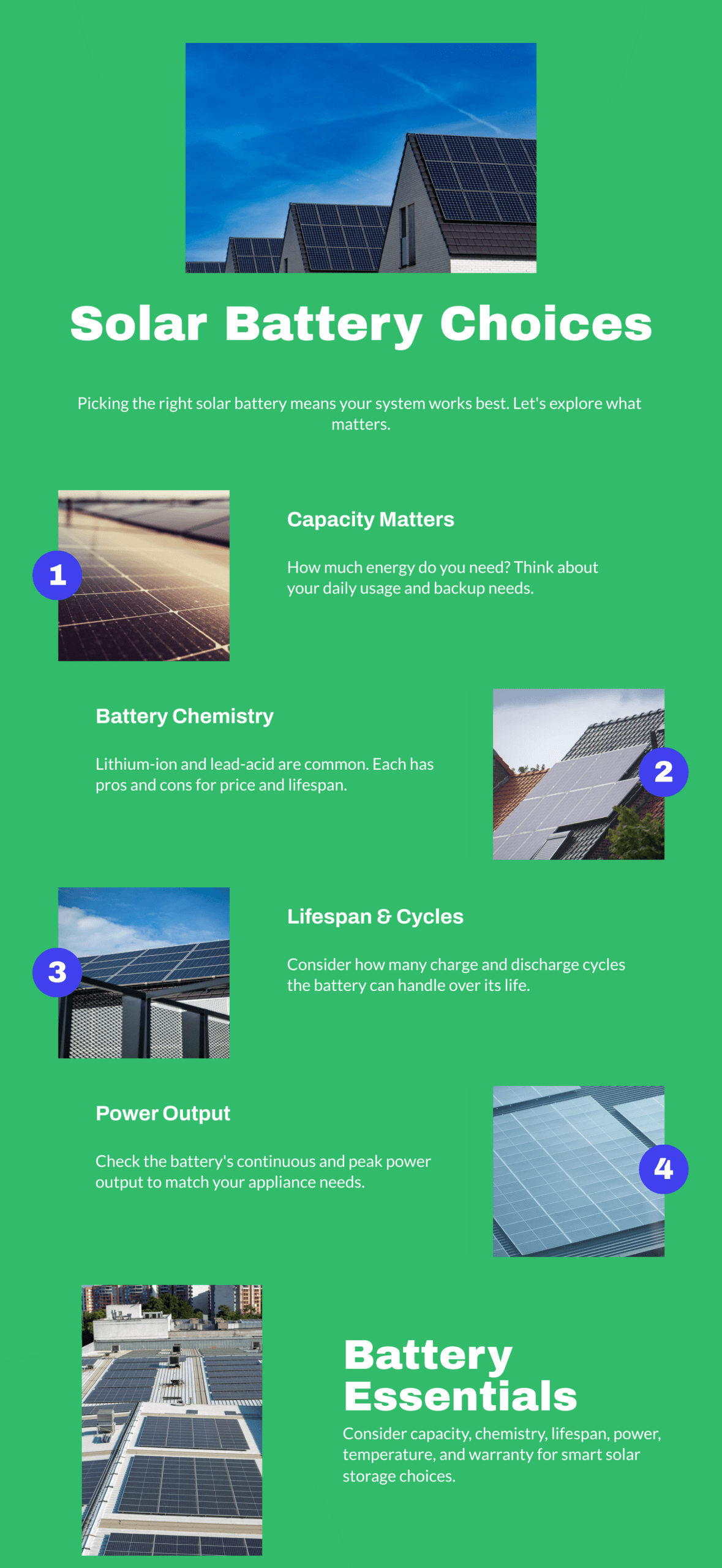
One of the first things to consider is how much electricity you want your battery to store. Battery capacity is typically measured in kilowatt-hours (kWh) and determines how much energy is available for use when your solar panels are not generating electricity. As such, you may wish to consider:
- How much electricity your household uses each day
- When you use the most energy
- Whether you want to cover evening usage or provide longer backup capability
Choosing a battery with the appropriate capacity can help you maximise the benefits of your solar panel system without paying for more storage than you are likely to need.
What type of battery is available?
There are several battery technologies available, each with its own advantages and considerations. Some of the most common options include:
- Lithium-ion batteries
- Lithium iron phosphate (LiFePO₄) batteries
- Lead-acid batteries
Many modern residential systems use lithium-based batteries due to their efficiency, lifespan and relatively compact size. A professional installer can explain which option is best suited to your circumstances.
How efficient is the battery?
Battery efficiency refers to how much of the stored energy can actually be used within your home. No battery is completely loss-free, and some energy is inevitably lost during the charging and discharging process. Higher-efficiency solar batteries allow you to make better use of the electricity generated by your solar panels. You may want to ask your installer:
- What the battery’s round-trip efficiency is
- How much energy loss can be expected
- How efficiency compares between available models
What is the battery’s lifespan?
As with any investment, it is important to understand how long your battery is expected to last. Battery lifespan is often measured by:
- The number of charge and discharge cycles
- The number of years covered by the warranty
- The expected performance over time
A battery with a longer lifespan may offer better long-term value, even if the initial purchase price is higher.
Should you consider battery warranties?
Warranties can provide reassurance and help protect your investment. Before making a decision, it is worth asking:
- How long the warranty lasts
- What level of performance is guaranteed
- What circumstances may affect the warranty terms
Understanding exactly what is covered can help you compare different products more effectively.
Will the battery work with your existing system?
Not all batteries are compatible with every solar installation. Whether you are installing a new solar system or adding storage to an existing one, compatibility is an important consideration. You should confirm:
- Whether the battery is compatible with your inverter
- If additional equipment is required
- Whether the battery can be integrated with future upgrades
A professional assessment can ensure all components work together efficiently.
Do you need backup power capability?
Some battery systems can provide backup power during a power cut, while others are designed purely to increase self-consumption of solar energy. If energy security is important to you, you may wish to ask:
- Whether the battery provides backup power
- Which circuits can be supported during an outage
- How long the battery could supply electricity if needed
Understanding these features can help you choose a system that aligns with your priorities.
So, what should you consider when choosing batteries for solar power storage?
Choosing the right battery for solar power storage involves considering factors such as storage capacity, battery type, efficiency, lifespan, compatibility and cost all play an important role in determining which system is best suited to your home.
For more information or advice, why not contact the experts today, here at the Eco Renewables Group? We work across the UK, from Oxford to Leicester, to deliver high quality solar power solutions.