If you are considering installing solar panels on a commercial building, one of the first factors to assess is your roof type. The structure, material, and layout of your roof can all influence how effectively a solar system can be installed and how much electricity it can generate. The good news is that solar panels can be installed on a wide range of commercial roof types. However, some are more suitable than others in terms of efficiency, cost, and ease of installation. So what roof types are best for solar panels on commercial buildings?
Flat roofs are one of the best options
Flat roofs are often considered one of the most suitable options for solar panels on commercial buildings. This is because they offer flexibility in panel positioning. Instead of being fixed to the angle of the roof, solar panels can be mounted on frames that tilt them to an optimal angle, typically around 30 degrees. The main benefits of solar panel installation on flat roofs include:
- Ability to optimise panel angle and orientation
- Easier installation and access for maintenance
- Flexibility to avoid shading from rooftop equipment
Flat roofs are commonly found on warehouses, offices, and industrial buildings, making them particularly well suited for large-scale solar installations.
Pitched roofs are effective and common
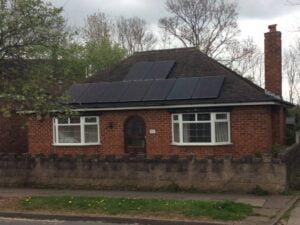
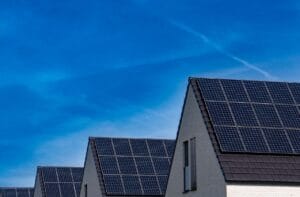
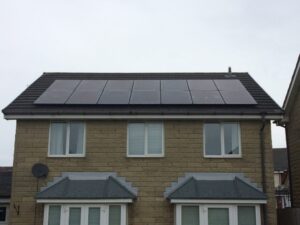
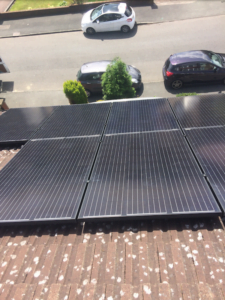
Pitched roofs are also a strong option for solar panels, particularly when they have a favourable orientation. On commercial buildings, pitched roofs are often found on offices, retail units, and smaller industrial properties. Panels are usually mounted directly onto the roof surface, following its natural angle. The effectiveness of a pitched roof depends on:
- Direction: South-facing roofs typically produce the most electricity
- Pitch: Angles between 30 and 40 degrees are generally ideal
- Shading: Minimal obstructions improve performance
While pitched roofs offer less flexibility than flat roofs, they can still deliver excellent results when conditions are suitable.
Metal roofs are highly compatible with solar panels
Metal roofs are widely used in commercial and industrial buildings, and they are generally very well suited for solar panel installation. In many cases, solar mounting systems can be attached directly to the seams of the metal roof without the need for extensive drilling. This can simplify installation and reduce labour time. The benefits of metal roofs include:
- Strong structural support
- Straightforward installation methods
- Long lifespan, often matching the lifespan of solar panels
Because of these qualities, metal roofs are often considered one of the most practical options for commercial solar systems.
Asphalt and bitumen roofs
Flat roofs covered with asphalt or bitumen are also suitable for solar panels, particularly when combined with ballasted mounting systems. Ballasted systems use weights to hold the panels in place rather than penetrating the roof surface. This helps to protect the roof membrane and reduce the risk of leaks. These roof types are common in commercial buildings and can support effective solar installations when properly assessed for load capacity.
Roofs with limited suitability
While most roof types can accommodate solar panels, some may present challenges.
Fragile or ageing roofs may not be suitable without reinforcement or replacement. Installing solar panels on a roof nearing the end of its lifespan for example can lead to additional costs later if the roof needs to be repaired or replaced.
Roofs with heavy shading from nearby buildings, equipment, or structures may also produce less electricity, reducing the overall benefit of the system.
In these cases, a professional assessment is essential to determine feasibility.
Structural considerations
Regardless of roof type, the structural integrity of the building is a key factor. Solar panels and their mounting systems add weight to the roof, so it is important to ensure that the structure can safely support the installation. A structural survey is typically carried out as part of the planning process.
For larger commercial systems, wind load and building height may also influence the design and mounting approach.
Making the most out of available space
Commercial buildings often have significant roof space, which can be used to install larger solar systems. Flat roofs, in particular, allow for flexible layouts that can maximise energy generation while maintaining safe access routes for maintenance. Even buildings with multiple roof sections or varying orientations can often accommodate effective solar designs.
Professional assessment and system design
While general guidelines are useful, the best roof type for solar panels ultimately depends on your specific building. A professional installer will assess:
- Roof structure and condition
- Orientation and pitch
- Available space and layout
- Shading and surrounding environment
Based on this assessment, they can design a system that makes the most of your roof’s potential.
So what roof types are best for solar panels on commercial buildings?
The best roof types for solar panels on commercial buildings are typically flat roofs, pitched roofs with good orientation, and metal roofs, all of which can support efficient and cost-effective installations.
Flat roofs offer the greatest flexibility, while pitched and metal roofs can also deliver strong performance when conditions are suitable. Even less conventional roof types may still be viable with the right design approach.
If you are considering solar panels for a commercial building, a professional evaluation of your roof is the best way to understand how effectively a system could be installed and how much energy it could generate.
For more information or advice, why not contact the experts today, here at the Eco Renewables Group? We work across the UK, from Oxford to Leicester, to deliver high quality solar power solutions.