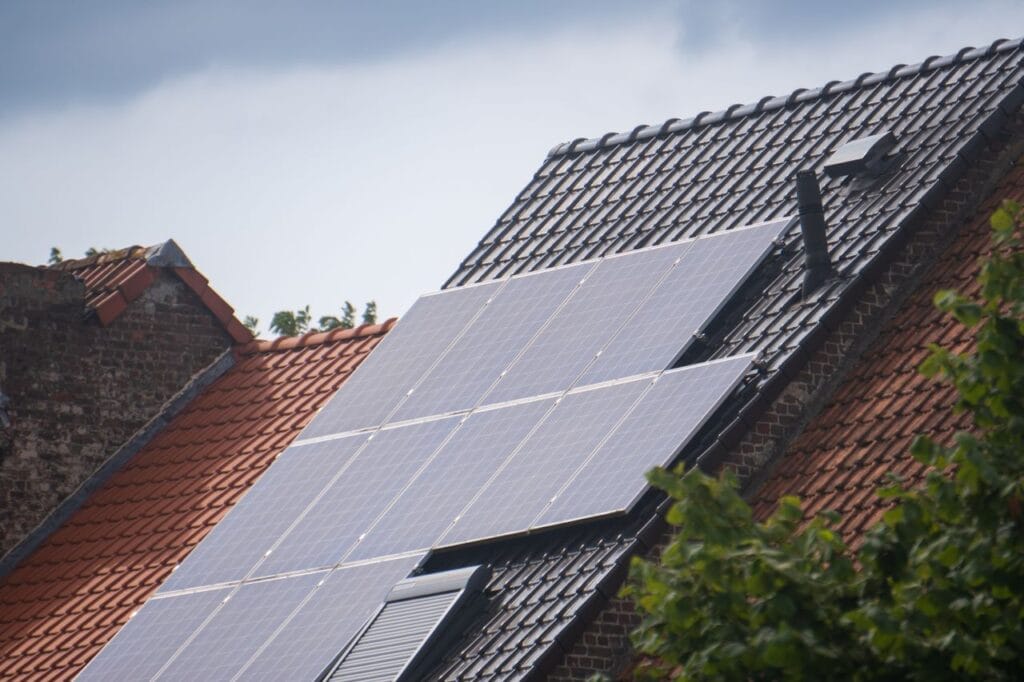
If you’re thinking about installing solar panels on your home or business premises, you might be wondering how large they are, and what size system you will need. However, this is not the only thing to take into account, as the weight of the system is also an important consideration, especially if the panels will be installed on the roof. So how heavy are solar panels? And what do you need to know about choosing the right option for your property?
How much does a typical solar panel weigh?
The exact weight of a solar panel varies depending on its size, design and manufacturer. However, most modern domestic panels weigh approximately 18 to 25 kilograms each. Although it’s important to note that larger commercial solar panels can weigh more, especially if they are a larger size with a greater surface area, or if they use additional materials.
You should also bear in mind that the panels alone aren’t the only factor to consider when it comes to solar panel weight, as the installation will also include the other equipment, like mounting systems, fixings and cabling.

Will the roof be assessed before installation?
Yes, the roof will be assessed before any installation goes ahead, and a professional installer will consider:
- The condition and age of the roof
- The type of roof structure
- The existing materials
- The weight of the proposed solar system
- How the panels will be securely mounted
This helps to ensure that the installation is appropriate for your property and does not place unnecessary stress on the roof.
Are solar panels too heavy for older houses?
The age of your property won’t rule out solar panel installation automatically, as it depends on the condition. In fact, older buildings can often accommodate solar installations, as long as the roof is in suitable condition and the structure can safely support the additional load. This is one reason why a professional assessment is so useful, especially for older properties, as it means that any repairs or improvements can be identified and implemented, before installation takes place.
What about the mounting system?
A solar installation will also require a mounting system to secure the panels to the roof. Depending on the type of roof and installation, this can include:
- Roof hooks or brackets
- Mounting rails
- Clamps
- Fixings
- Electrical cabling
The right mounting system should be professionally selected based on the construction of your property and the type of roof.

Can the weather affect the load on your roof?
While the solar panels themselves, and the rest of the equipment including mounting systems, are often considered when thinking about the weight, there is another factor to consider.
Weather conditions can place additional force on your roof. Wind, for example, can exert pressure on the panels and their mounting system. This is why a professionally designed installation needs to account for the property’s location, roof structure and expected environmental conditions.
Is weight an important factor when choosing solar panels?
Weight can be one consideration when comparing different panels, but it should not be the only one. You may also want to look at:
- Panel efficiency
- Power output
- Physical dimensions
- Product and performance warranties
- Manufacturer reputation
- Expected lifespan
Choosing a panel based solely on its weight may mean overlooking other factors that have a greater impact on the long-term performance of your system.
So, how heavy are solar panels?
Most modern domestic solar panels weigh around 18 to 25 kilograms each, although the exact figure varies between manufacturers and models. The total weight of a solar installation will also include the mounting system and other components.
For more information or advice, why not contact the experts today, here at the Eco Renewables Group? We work across the UK, from Oxford to Derby, to deliver high quality solar power solutions.