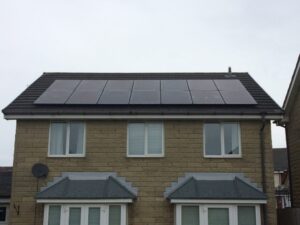
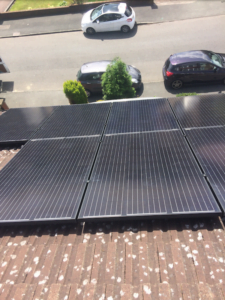
If you live in a terraced house and are considering solar panels, you may be wondering whether your property is suitable. While terraced homes can present some limitations compared to detached properties, the answer is yes, many terraced houses can successfully have solar panels installed. But the key is understanding how factors such as roof space, orientation, and shading affect what is possible for your specific home.
Are solar panels suitable for terraced houses?
Solar panels can be installed on most types of residential properties, including terraced homes. In many cases, terraced houses are just as capable of benefiting from solar energy as semi-detached or detached properties.
However, because terraced houses are typically connected to neighbouring homes, there may be slightly less flexibility in terms of roof space and layout. This makes careful planning and system design particularly important.
Roof space and layout
One of the main considerations for terraced houses is the amount of available roof space. Compared to larger properties, terraced homes often have smaller roof areas, which can limit the number of panels that can be installed. However, even a modest system can still generate a meaningful amount of electricity and reduce your energy bills.
The layout of your roof also matters. Features such as chimneys, skylights, or dormer windows can affect how panels are positioned.
Roof direction and angle
As with any property, the direction and pitch of your roof will influence how effective your solar panels are:
- South-facing roofs typically provide the best performance
- East- or west-facing roofs can still generate good levels of electricity
- North-facing roofs are generally less suitable in the UK
If your terraced house has a suitable orientation, it can still support an efficient solar system even with limited space.
Shading from nearby buildings
Terraced houses are often located close to neighbouring properties, which can increase the likelihood of shading. This is because shadows from adjacent homes, chimneys, or nearby structures are likely to be cast onto your roof, reducing the amount of sunlight reaching your panels, particularly during certain times of the day.
However, this does not necessarily rule out solar panels. Modern technologies such as microinverters or power optimisers can help reduce the impact of partial shading by allowing panels to operate more independently.
Planning permission and regulations
In many cases, solar panel installations on residential properties fall under permitted development rights, meaning you may not need formal planning permission. However, there are some exceptions, including:
- Listed buildings
- Homes in conservation areas
- Installations that significantly alter the roof’s appearance
As a result, it is always best to check local planning requirements before proceeding. A professional installer can guide you through this process.
Structural considerations
Before installation, your roof will need to be assessed to ensure it is structurally suitable. This is because solar panels add weight to the roof, so it is important that the structure is in good condition. This is usually not an issue for most homes, but a survey helps confirm that your roof can safely support the system.
Shared or party walls
Because terraced houses are attached, you may also need to consider party wall agreements in some cases. For example, if the installation work affects a shared wall or structure, you may be required to notify your neighbours under the Party Wall Act. This is typically a straightforward process, but it is worth being aware of.
Battery storage and maximising savings
If your roof space is limited, you may want to consider adding a battery to your system. This is because battery storage allows you to store excess electricity and use it later, helping you make the most of the energy your panels generate. This can be particularly useful in terraced houses where system size may be smaller.
Are solar panels worth it for terraced houses?
Even with some limitations, solar panels can still offer meaningful financial and environmental benefits for terrace homes. A smaller system may generate less electricity than a larger installation on a detached property, but it can still:
- Reduce your electricity bills
- Lower your carbon footprint
- Provide long-term energy savings
The key is designing a system that makes the most of the space and conditions available.
So can a terraced house have solar panels?
Yes, a terraced house can have solar panels, and many do so successfully. While factors such as roof space, shading, and layout may require careful consideration, these challenges can often be managed with the right system design.
If your roof has reasonable access to sunlight and is structurally sound, solar panels can still be a worthwhile investment. A professional assessment will help you understand what is possible for your home and how much you could benefit from installing a system.
For more information or advice, why not contact the experts today, here at the Eco Renewables Group? We work across the UK, from Oxford to Leicester, to deliver high quality solar power solutions.