If you’re considering installing solar panels at your business premises, you may be wondering whether your roof is suitable for a commercial solar installation. Factors such as roof size, age, construction, direction and exposure to sunlight can all influence whether solar panels are a practical option for your building.
The good news is that many different types of commercial roofs can accommodate solar panels. Warehouses, offices, factories, schools and retail buildings may all have suitable roof space for solar PV. However, having a large roof does not automatically mean it is ready for installation. Your roof’s condition, structural strength and available space will need to be assessed before a system can be designed.
What Type of Commercial Roof Is Suitable for Solar Panels?
Commercial solar panels can be installed on a variety of roof types, provided the correct mounting equipment and installation methods are used.
Flat roofs are common on offices, schools and retail buildings. They can offer substantial space for solar panels, with mounting frames allowing installers to position the panels at a suitable angle. However, the design must account for drainage, waterproofing, wind loading and any additional weight from mounting equipment or ballast.
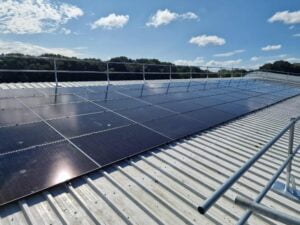
Metal roofs are also frequently suitable, particularly on warehouses and industrial buildings. Standing seam and profiled metal roofs can accommodate solar panels using compatible fixing systems. Before installation, the condition and strength of the roof sheets and supporting structure should be checked.
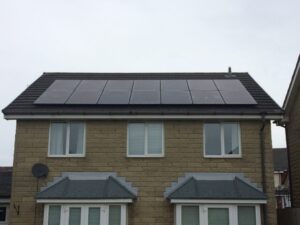
Pitched roofs, including those covered with tiles or slates, can also support commercial solar installations. The panels are attached using appropriate mounting brackets and fixings, with the roof structure needing to support the additional loads.
The important point is that no single roof type guarantees suitability. Your installer will need to consider the construction and condition of your particular building before recommending a system.
Can Your Roof Support the Weight of Solar Panels?
One of the most important considerations is whether your commercial roof can safely support the additional weight of a solar installation.
Solar panels, mounting frames, fixings and other equipment all add weight to the building. Some flat roof installations also use ballast to keep the panels securely in position, which can increase the overall load.
Wind and snow loads must also be considered when assessing structural suitability. A roof may appear strong enough to support the panels themselves but still require further assessment to establish whether it can withstand the forces associated with the complete installation.
A suitably qualified structural engineer may need to assess the roof and supporting structure before installation proceeds. This is particularly important for older buildings, lightweight roof constructions and larger commercial solar systems.
If strengthening work is required, your installer should explain what needs to be addressed before the solar panels can be fitted.
Does the Age and Condition of Your Roof Matter?
The condition of your roof is just as important as its structural strength. Commercial solar panels are a long-term investment, so you want to make sure the roof beneath them is in a suitable condition for the years ahead.
If your roof has existing leaks, damaged coverings, corrosion or deteriorating fixings, these problems should be investigated before installation. Fitting solar panels over a roof that needs significant repairs could create additional costs later, particularly if the panels have to be removed to allow roofing work to take place.
It is also worth considering how much useful life your roof has remaining. If you expect to replace it in the near future, completing the roofing work before installing solar panels may be a more practical approach.
A roof survey can help identify any necessary repairs and establish whether your building is ready for a solar installation.
Does Your Commercial Roof Need to Face South?
A south-facing roof is often considered ideal for solar panels in the UK because it can provide favourable conditions for electricity generation. However, your commercial roof does not have to face directly south to be suitable.
East-facing roofs can generate more electricity during the morning, while west-facing roofs tend to produce more in the afternoon. This can be useful for businesses that operate during particular hours or have higher electricity demand at different points throughout the day.
Flat roofs offer additional flexibility because panels can be positioned using suitable mounting frames. This allows installers to consider different orientations and layouts when designing the system.
Rather than ruling out your roof based on its direction alone, a professional installer can assess its orientation and estimate the electricity it could generate.
Will Shading Affect Your Commercial Solar Installation?
The amount of sunlight reaching your roof can have a significant impact on how much electricity your solar panels generate.
Nearby buildings, trees, chimneys, rooftop equipment and other structures can all cast shadows over your panels. Even features on your own roof, such as ventilation systems and air conditioning units, may affect the amount of usable space available.
Some shading can be managed through careful panel positioning and suitable system design. However, extensive shading may reduce the amount of electricity your installation can generate and affect its financial benefits.
Your installer should assess potential shading throughout the day and consider how it changes across the seasons. This will help establish which parts of your roof are most suitable for solar panels.
How Much Roof Space Do You Need for Commercial Solar Panels?
The amount of roof space required will depend on the size of the solar system you want to install and how much electricity your business uses.
A larger roof may provide room for more panels, but the entire surface will not necessarily be available for installation. Rooflights, vents, drainage systems, access routes and existing equipment may all need to be accommodated within the design.
On flat roofs, installers may also need to leave space between rows of panels to prevent them from shading one another.
It is important to remember that the biggest possible installation is not always the most suitable option. Your system should be designed around your electricity requirements, available roof space and the amount of electricity you can use or export.
Does Your Roof Need Safe Access for Installation?
Safe access is another important consideration when assessing whether your commercial roof is suitable for solar panels.
Installers need to be able to reach the roof safely to carry out surveys, transport equipment and complete the installation. You should also consider how the panels and associated equipment will be accessed for future inspections and maintenance.
Some commercial roofs contain fragile surfaces, rooflights or older roofing materials that require additional safety precautions. Fibre-cement roofing, for example, may need specialist assessment, particularly where asbestos could be present.
Your installation team should consider access arrangements and appropriate safety measures before work begins. This helps ensure that the installation can be completed without creating unnecessary risks for contractors or your employees.
What Other Factors Should You Consider Before Installing Commercial Solar Panels?
Your roof is only one part of the overall assessment. Your building’s electrical infrastructure and energy consumption will also influence whether a commercial solar installation is worthwhile.
An installer may need to review your electricity bills, half-hourly consumption data, existing electrical equipment and available grid connection capacity. This helps establish how much electricity your business could use directly and what size solar system would be appropriate.
You should also consider whether you own the building or need permission from a landlord or property owner before making changes to the roof.
Planning requirements and electricity network approvals may also need to be considered, depending on the building, installation and system capacity.
So, Is Your Roof Suitable for Commercial Solar Panels?
Your commercial roof could be suitable for solar panels even if it is flat, pitched, east-facing or made from metal. The most important factors are its structural strength, condition, available space, exposure to sunlight and suitability for safe installation.
A professional assessment can help establish whether your roof is ready for solar panels or whether repairs, strengthening work or changes to the proposed design are needed first.
If you’re considering commercial solar panels for your business, speaking to an experienced installation team is a good starting point. They can assess your building, review your energy requirements and help you understand what type of solar system could work for your premises.