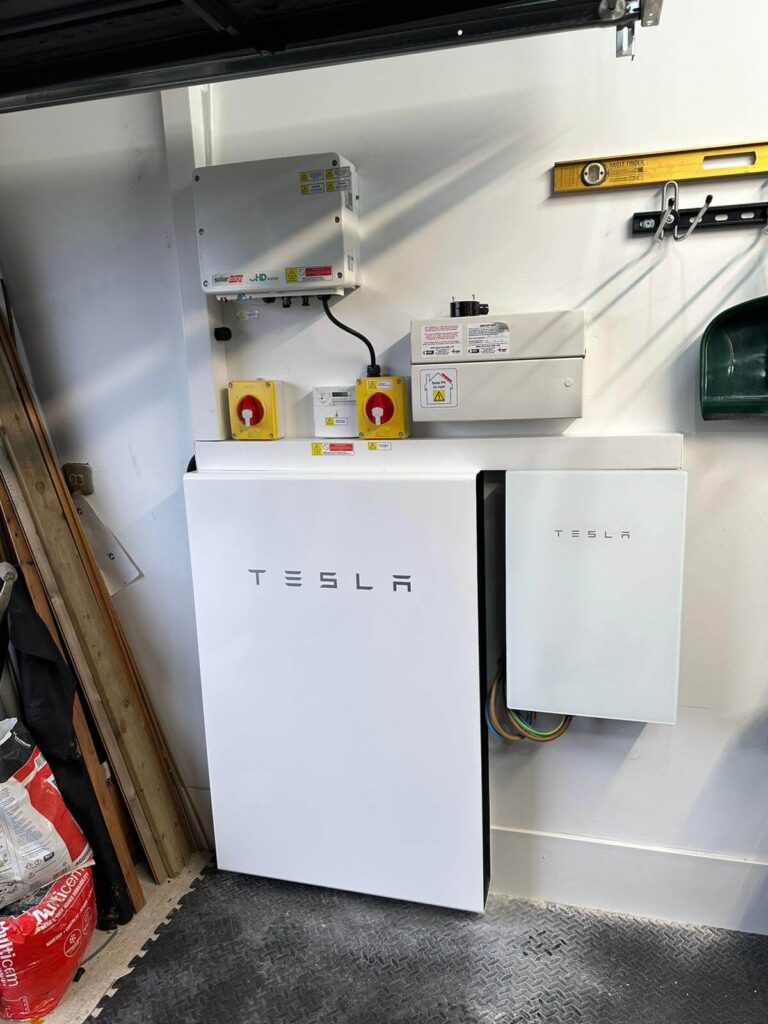
If you are considering installing solar panels, you may also be thinking about adding battery storage to your system. Solar batteries allow you to store excess electricity generated during the day and use it later when your panels are producing less energy. However, solar batteries come in different sizes, so it is important to understand which option could work best for your property. So how big are solar panel batteries? And what size battery do you need?
What size are solar panel batteries?
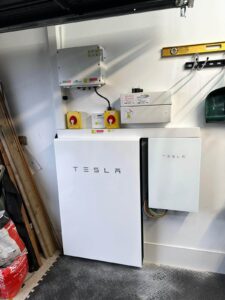
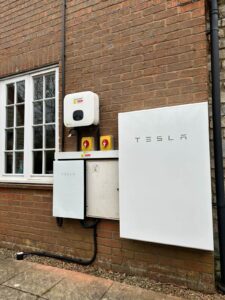
Solar batteries are available in a range of sizes, from compact units designed for smaller households to larger systems that can store more electricity.
A typical domestic solar battery might have a storage capacity of around 5-15 kilowatt-hours (kWh), although smaller and larger options are available. The physical size will depend on the manufacturer, model and battery capacity.
For businesses with greater electricity demands, larger batteries or multiple battery units may be more appropriate.
What does solar battery capacity mean?
When comparing solar batteries, capacity is often more important than physical size. Battery capacity is measured in kilowatt-hours (kWh) and indicates how much energy a battery can store. It helps you understand how much electricity may be available for use when your solar panels are not generating enough power.
For example, a battery with a capacity of 10 kWh can theoretically store 10 kilowatt-hours of electricity when fully charged. The amount you can actually use will depend on its usable capacity, efficiency and operating settings.
A larger-capacity battery can store more electricity, but it will usually cost more and require more installation space.
How much battery storage does your home need?
The right battery size will depend on how much electricity you use and when you use it. For example, if your household uses most of its electricity during the daytime, you may have less need to store large amounts of solar energy. However, if you use more electricity in the evening, a battery could help you make better use of the energy your panels generate during daylight hours. As such, when choosing a battery, you should consider:
- Your household’s daily electricity consumption
- The size and output of your solar panel system
- How much surplus electricity your panels generate
- When you typically use the most electricity
- Whether you plan to charge an electric vehicle
- Your budget and available installation space
How much space does a solar battery need?
The space required for a solar battery depends on its physical dimensions and the installation requirements specified by the manufacturer. Some domestic batteries can be mounted on a suitable wall, while others need floor space. Larger systems may require more room, particularly if several units are installed together.
You will also need to consider access for installation and maintenance, ventilation where required, and the manufacturer’s clearance and safety instructions.
A garage, utility room or suitable external location may be an option, depending on the battery model and property. Your installer can advise on an appropriate location.
Are bigger solar batteries better?
A larger battery is not necessarily the best choice for every property. If your battery is too small, it may fill up quickly when your solar panels generate surplus electricity. You may then export additional electricity to the grid rather than storing it.
However, if your battery is much larger than your typical surplus generation, you may not use its full capacity regularly. This could make the additional expense less worthwhile.
As such, the aim is to choose a battery that balances your solar generation, electricity consumption, storage needs and budget.
How big should a solar battery be for a business?
Businesses may need different solar battery capacities depending on the size of their premises and their electricity requirements. A small office with modest electricity consumption may need considerably less storage than a workshop, warehouse or commercial property that operates into the evening.
This means that businesses should consider their daytime energy use, operating hours, peak electricity demand and whether they have equipment that needs to run outside daylight hours.
For larger installations, a professional energy assessment can help determine whether battery storage is suitable and what capacity would be appropriate.
Can you add more battery storage at a later date?
Depending on the battery system, it may be possible to increase your storage capacity by adding compatible battery units in the future. This could be useful if your electricity consumption increases, you install an electric vehicle charger or you expand your solar panel system.
However, not every battery can be expanded, and additional units must be compatible with your existing equipment. It is worth discussing future expansion with your installer before choosing a system.
For more information or advice, why not contact the experts today, here at the Eco Renewables Group? We work across the UK, from Oxford to Derby, to deliver high quality solar power solutions.